



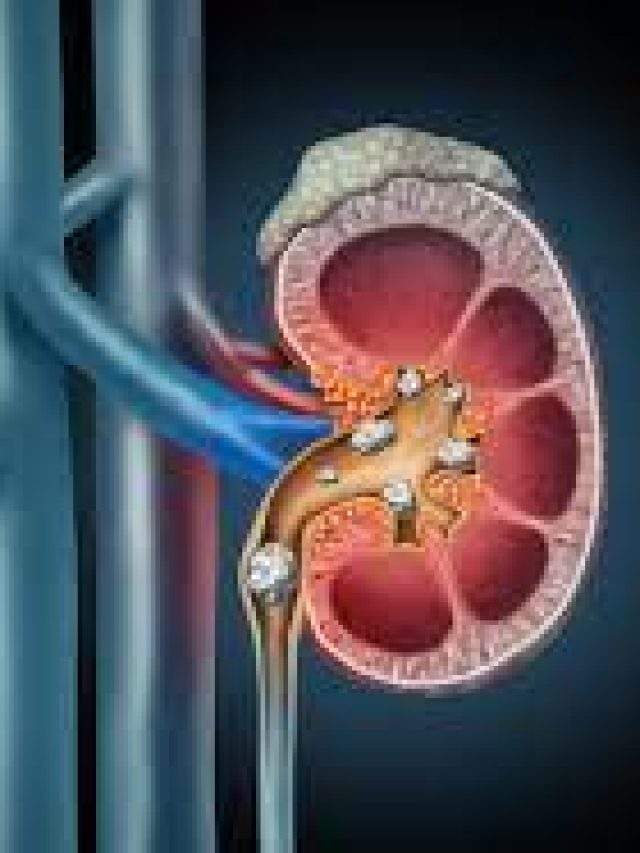





Confused whether you have kidney stones? Well, an X-ray can help you detect the stones present in your kidney. Get your X-ray done today to know the number and size of kidney stones. Specifically for the detection of kidney stones, Kidney-Ureter-Bladder (KUB), which is an X-ray used to determine the number of kidney stones by revealing dense calculations. Although smaller kidney stones or uric acid stones might be missed by a simple X-ray, a KUB X-ray assists in determining the size of the stone and also the location for the planning of the treatment. However, CT scan and ultrasound are preferred for more detailed imaging for the diagnosis, as they help in detecting smaller stones without any radiation. They offer much better resolution and also sensitivity to find every stone, but an IVP X-ray makes use of dye for a magnified view.
Types of X-rays used in the detection of kidney stones
- Kidney-Ureter-Bladder (KUB) – It refers to a basic X-ray which shows the urinary tract. It is helpful for detecting large, dense stones. But it can somehow miss the smaller kidney stones.
- Intravenous Pyelogram (IVP) – It refers to a special type of X-ray in which contrast dye is injected in order to accentuate the urinary tract for providing a more detailed view.
What does an X-ray show?
An X-ray is helpful in detecting the stones which are present in your kidney.
- Size as well as location – An X-ray helps the doctors to determine the size of the kidney stone and also to detect the exact location where the stone is present.
- Density of the stone – Stones tend to appear whitish because of their high density. The white colour contrasts with the grey soft tissues and also the black air.
Limitations and Contrast
- Stones are missed: the stones which are smaller, that is, less than 3mm and even those which are of less density, specifically made of uric acid, might not be able to show up in an X-ray.
- X-ray vs CT scan: Generally superior for sensitivity, CT scans reveal most of the stones and also the small ones without any contrast.
- X-ray vs Ultrasound: Ultrasounds are considered good for the detection of stones, thereby monitoring them without any radiation. But ultrasounds can struggle with hindrances.
Working of the procedure
- You are required to lie on a stand or a table. The X-ray machine then takes the images of your abdomen.
- You will then be asked to hold your breath in order to get clear views and pictures. You may be asked to change positions.
Usage of an X-ray
- An X-ray is used to diagnose the pain in your abdomen from a suspected kidney stone.
- It helps in checking the blockages as well as obstructions.
- Moreover, it is used to monitor the stones prior to the treatments and also subsequent to the treatments, such as lithotripsy.
Conclusion
If you are suffering from abdominal pain or suspect kidney stones, you should visit the best urologist in Ludhiana at Khosla Stone Kidney and Surgical Centre. Dr Rajesh Khosla, with his expertise of more than 20 years, offers the best treatment to his patients. From imaging tests to other examinations, the entire staff is known for properly handling the case, thereby providing the most effective treatments.
FAQs
Q1: What are the risks related to X-rays, which are used to detect kidney stones?
A: Real risks involve exposure to the radiation, which is cumulative, and also the potential interference from the recent barium. It is significant to inform your doctor if you are pregnant.
Q2: What can I do if stones are not detected through an X-ray?
A: The next step for the detection of the kidney stone would be to detect it through a CT scan.