



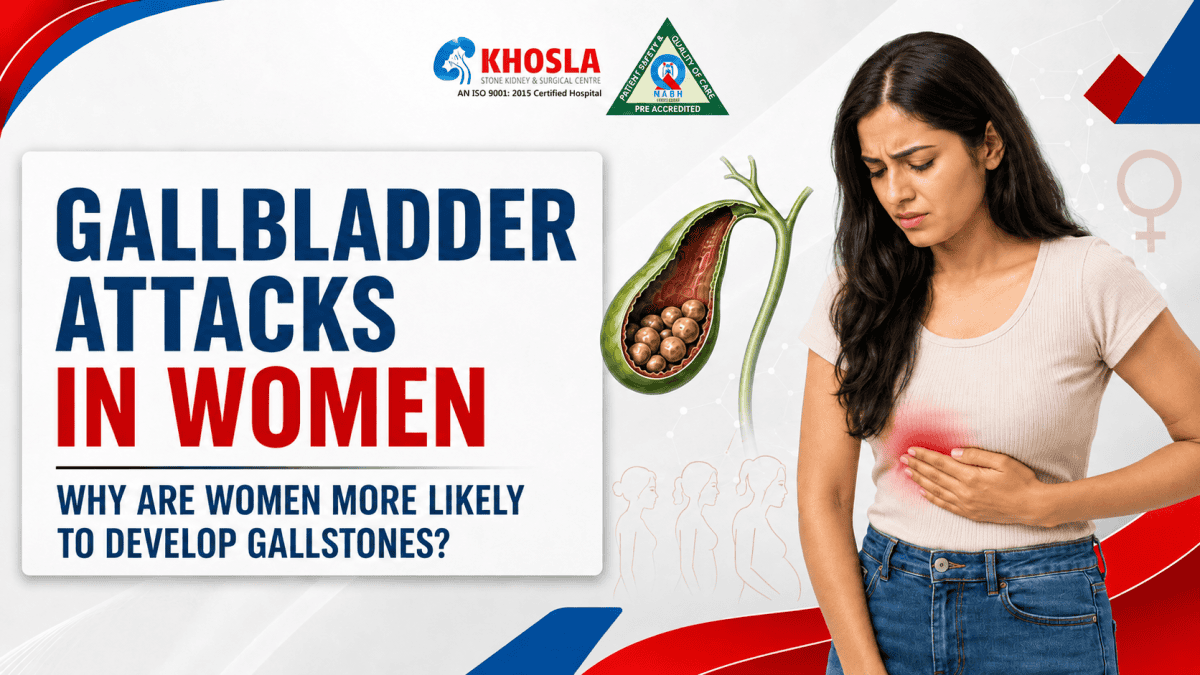

You might have heard or read somewhere that women are more likely to develop gallstones than men. Do you know how much truth lies in this sentence? Certainly, due to different health challenges, they are more prone to gallstone formation than men, disrupting their daily life. Due to this, many women experience gallbladder attacks, including restricted bile flow, which makes their gallbladder contract, thus causing sharp pain. The dull and agonizing pain can be felt in the upper right abdomen, along with other signs such as nausea and vomiting. Such sharp pain can become a major roadblock in continuing daily chores and keeping up with their professional life as well. However, the question arises as to why women are more likely to develop gallstones. The simple answer is hormonal and weight changes. Certainly, hormonal imbalance negatively impacts the bile flow, causing the formation of gallstones. Understanding the necessary factors responsible for making women prone to gallstone formation is crucial in order to manage the diet and lifestyle choices. In this blog, specific factors are mentioned that are mainly responsible for making women more likely to develop gallstones, so keep reading.
Key factors raising the women’s possibility of developing gallstones.
Increased estrogen levels: During pregnancy or the menstrual cycle, women’s estrogen levels remain high, due to which their liver releases cholesterol into the bile. This results in gallstone formation, causing gallbladder attacks, including sharp abdominal pain, along with feeling nauseous.
Release of progesterone levels: Another hormone among women, majorly responsible for gallstone formation, is progesterone. Due to this hormone, women’s gallbladders become unable to empty as this can relax the muscle tissue.
During pregnancy: Women in their pregnancy stage can also have a high risk of gallstone formation. The reason behind this includes the hormonal imbalance, which eventually disrupts the bile flow. Also, the physical pressure of the uterus over the biliary tract increases the risk of gallstone formation.
Different life stages: Women experience hormonal fluctuations at different life stages, due to which their bile duct gets disrupted or their gallbladder functioning gets affected. This usually happens during menopause or perimenopause, making women more prone to gallstone formation.
Sudden weight loss: Usually, before pregnancy, women’s bodies undergo a sudden change in their weight as they start losing it rapidly. This happens due to specific diets that make their liver release extra cholesterol into the bile, leading to gallstone formation.
Conclusion
It has been apparently demonstrated from the above-mentioned points that hormonal fluctuations and weight changes are mainly responsible for making women more prone to gallstone formation than men. At different life stages, women experienced hormonal fluctuations, triggering the liver to release cholesterol into bile, resulting in gallstone formation. However, getting appropriate guidance from the professionals regarding the prevention of gallstone formation is crucial. Along with this, if you have been feeling sharp abdominal pain, which sometimes radiates to your right shoulder, then it is essential to get engaged with the professionals. The experts have precise knowledge regarding managing gallstones through medications and specific lifestyle changes. Also, for complex cases, the gallbladder removal surgery seems a better option than managing the symptoms. If you have been looking for professionals proficient in handling complex gallbladder cases, then look no further than Dr. Rajesh Khosla. You can discuss the specific symptoms with him and our other experts at Khosla Stone Kidney and Surgical Centre, known for handling complex kidney stone and gallstone cases.
FAQs
- Is it possible that gallstones would pass on their own without any medications?
If the gallstone is small in size, then it has higher chances of passing naturally; however, if it’s a large size, even blocking your bile duct, then passing it naturally might not be possible.
- How much time does gallbladder removal surgery take?
Overall, gallbladder removal surgery takes about one to two hours, including the use of anaesthesia, and is an effective procedure.