




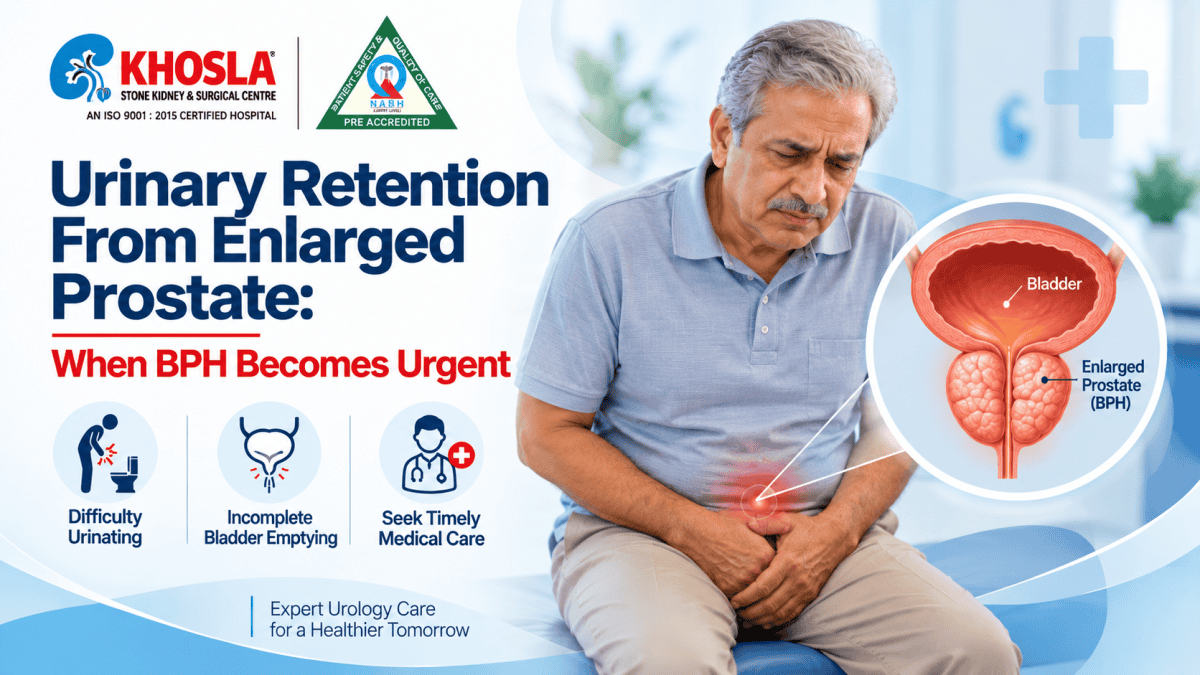

It all starts gradually when you have a persistent urge to pee, but suspiciously the urine flow is weak, slow and inconsistent, until one day you get to the loo, the bladder is full, and you are dancing the pee dance, but you can’t pee! You are not holding it; the muscles are relaxed, but somehow something seems to block the flow. It’s a painful experience that damages the bladder, causes kidney damage and needs urgent medical treatment.
Urinary retention due to an enlarged prostate is a health problem that requires planned medical care, but it can progress into a severe case where the urinary tract is completely blocked, which is known as acute urinary retention. In this case, advanced emergency treatment should be provided, and it should be treated as an emergency condition that demands urgent care to drain the bladder because it causes progressive damage to the urinary tract.
Such cases occur, and it’s always best to know how to handle the BPH urinary retention symptoms and the emergency condition. Take some time to go through this blog to learn about prostate enlargement and how it causes urinary retention.
BPH urinary retention symptoms questions
How does enlarged prostate lead to urinary retention?
Right below a male’s bladder is a prostate gland, which has a vital function in protecting, nourishing and transporting sperm for ejaculation. This gland has the capacity to swell and enlarge from the size of a walnut to the size of a grapefruit or an orange, and this could be due to different factors like aging, obesity, lack of exercise, or a hereditary condition. The growth is gradual and may not cause any major symptoms, but as time goes on, it can affect the urinary tract, affecting the flow of urine.
Here are the symptoms
The symptoms may be subtle and not so alarming, but a slight hint of BPH urinary retention symptoms in Ludhiana should always be a major reason to go for a checkup. A person with an enlarged prostate may experience;
- The persistent need to urinate frequently during the day, which can be worse at night.
- Difficulty in controlling the urine flow or starting to urinate, which often makes a person want to apply more force to push out the urine.
- The persistent feeling of incomplete urination even after frequently urinating.
- Experiencing a weak urinary system where the flow is weak, slow and inconsistent.
Who does this issue apply to?
In most cases, enlarged prostate affects older men but has recently been diagnosed in men in their late 30s or 40s. It is mostly prevalent in people like;
- Individuals with a family history of enlarged prostate
- Individuals with medical conditions such as diabetes and heart disease
Is BPH an emergency health problem?
Benign Prostatic Hyperplasia is not considered to be an emergency health problem, but as the prostate enlarges, it can lead to complete disruption of urinary flow, which hinders an individual from releasing urine. In such a case, this becomes an emergency medical condition known as acute urinary retention that needs immediate treatment by a skilled specialist. Here is what one can do in emergency conditions;
- Rush to the nearest hospital
Acute urinary retention causes chronic pain, bladder damage, as well as kidney damage. In such cases, home remedies or over-the-counter medications are not effective; expert emergency treatment is needed to alleviate the symptoms.
- Medical drainage
The emergency treatment involves medical catheterization, where a flexible tube is inserted through the urethra so that it can drain the trapped urine from the bladder.
What’s the truth behind the common misconceptions about BPH?
Myth: Enlarged prostate means prostate cancer
Fact: Enlarged prostate does not mean the individual has cancer. An enlarged prostate is categorized as benign prostatic hyperplasia, which is noncancerous, or prostate cancer. It can only be confirmed after diagnosis of the type of prostate enlargement. However, it is possible for one to be diagnosed with both.
Myth: Drinking less water reduces the symptoms
Fact: Less consumption of fluids does not alleviate the symptoms but has the capacity to worsen the symptoms because the bladder becomes irritated due to low amounts of urine. Hence, it causes concentrated urine and worsens the symptoms.
Myth: The treatments cause permanent sexual dysfunction
Fact: The advanced treatments aim to restore functionality and alleviate the symptoms without affecting an individual’s sexual function
What type of treatments should I expect?
Urinary retention is treated by addressing the swelling of the prostate gland, and the treatment is prescribed after diagnosis. The treatments involve;
- Lifestyle changes and observations
This type of treatment is effective when the condition is at its early stages, which involves regular checkups for observation, and at this point it is advised to stop alcohol and caffeine, reduce them whilst practising timed urination and limit intake of fluids before bedtime.
- Medications
Medications are also prescribed with the aim of shrinking the enlarged prostate, which takes several months, and relaxing prostate and bladder muscles to improve urinary flow.
- Minimally invasive procedures
There are some minor procedures that can be done to stop the progression of the enlarged prostate, such as;
Water vapor thermal therapy: This procedure involves the use of steam to destroy excess tissue of the prostate.
Prostatic urethral lift: This procedure involves inserting implants to hold the prostate away from the urethra.
Prostate artery embolization: It involves blocking blood supply to the prostate in order to reduce the size.
- Surgical options
Transurethral resection of the prostate: The experts remove excess obstructing prostate tissue from the urethra.
- Laser therapy: This method aims at removing tissue whilst minimizing bleeding risks.
In closing
As men advance in age, it’s always best to go for medical checkups to sustain a healthy body and to have the opportunity to get early treatment in case of any health problem such as an enlarged prostate. Always be on the lookout for the BPH urinary retention symptoms that are mentioned, and always be the one to help someone who is facing the same problem but might take it lightly since the symptoms are not alarming, by providing them with the right knowledge and leading them to trusted specialists.
Take time to consult a specialist about BPH urinary retention symptoms guide at Khosla Stone Kidney and Stone Surgical Centre, where Dr Rajesh Khosla and a number of specialists provide diagnostic treatments, advanced medical treatments and awareness about enlarged prostate. The best way to know about prostate enlargement is by taking a step to seek consultation.
References
The information gathered in this blog is extracted from reliable research expert sources: the National Institute of Diabetes and Digestive and Kidney Diseases, as well as Urologix-the innovation leader for BPH therapy.
FAQ’s
- Can I still have children after being diagnosed with an enlarged prostate?
It’s possible to have children after a diagnosis of benign prostatic hyperplasia. The condition does not stop the production of sperm, but severe cases can affect the flow when releasing the semen.
- Do the treatments restore normal functionality of the prostate?
The medications aim to restore the size and functionality of the prostate gland, but this also depends on the level of severity of the problem.
- How long does it take to recover from the enlarged prostate?
The duration of the recovery process is dependent on the type of treatment prescribed. It can take a few days when the individual is on medications or minor procedures, and it can take several weeks for major procedures.
- Is prostatic urethral lift a permanent treatment?
The prostatic urethral lift is not considered to be a permanent treatment, but it offers long-lasting results for 5 years and may require checkups.
- Does benign prostatic hyperplasia lead to kidney stones?
Benign Prostatic Hyperplasia may indirectly cause kidney stones, as it causes urinary retention, which creates an environment for the formation of kidney stones in the bladder.